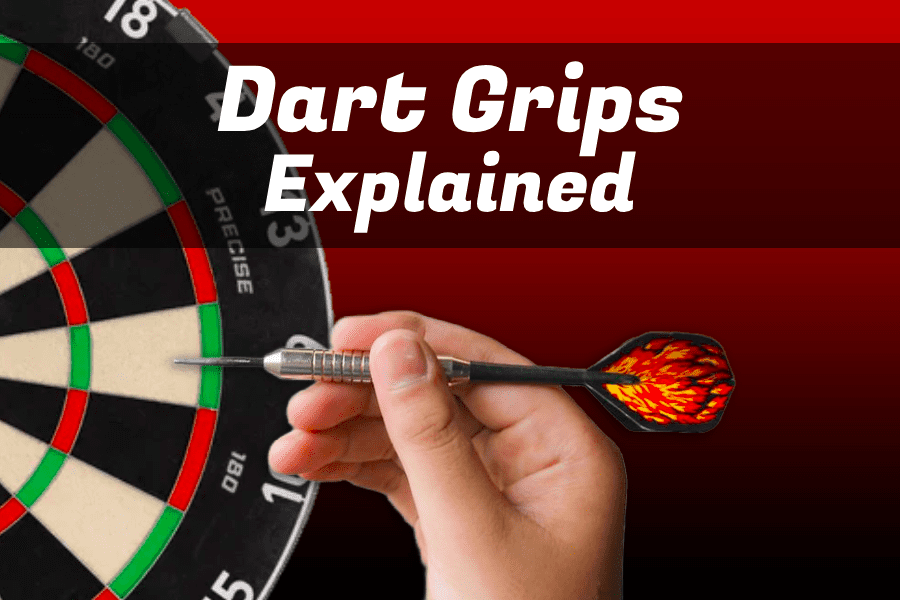
Understanding Dart Grip Styles and Why They Matter
ow you hold a dart affects more than comfort—it directly impacts your throw, trajectory, and accuracy. Every dart has a balance point, and where your fingers sit along the barrel determines how the dart behaves in the air. Small adjustments to finger placement can change the arc, speed, and stability of your throw.
Forward, center, and rear grips each create different flight paths. A forward grip produces a straighter, faster throw. A center grip delivers balance and a moderate arc. A rear grip allows a higher, slower arc with more lift.
Understanding your natural grip style helps you refine your technique. Once you know how your grip interacts with the dart’s weight and balance, you can select a dart setup that feels natural. Consistent grips lead to predictable throws, which is key for accuracy and high scores. Practicing with awareness of your grip also helps reduce fatigue and improves control over multiple rounds.
The Forward Grip: Control and Direct Throws
A forward grip means holding the dart near the front of the barrel, close to the tip. This style gives strong control and allows sharp, direct throws. The trajectory is usually flat, and the dart reaches the board quickly with minimal arc.
The forward grip provides immediate feedback from your fingers to the dart. You can feel small movements and adjust quickly. However, it also requires precision in release; even slight inconsistencies can cause the nose of the dart to dip or wobble.
To optimize a forward grip, use darts with a front-weighted barrel. Shorter shafts keep the center of gravity forward, and slim flights reduce drag. This setup encourages a straight line to the target. Practicing with a forward grip can improve accuracy for close doubles, trebles, and tight groups. Focus on keeping your fingers relaxed, applying even pressure, and releasing the dart cleanly.
Forward grips work well for players who prefer a sharp, fast release and rely on speed and accuracy over high arcs. It may take practice to maintain a straight trajectory consistently, but the payoff is precise, controlled throws.
The Center Grip: Balance and Consistency
Center grippers hold the dart around the middle of the barrel. This style distributes weight evenly between the front and back, giving a natural and stable feel. The throw usually produces a gentle arc, balancing speed and control.
The center grip is versatile, suitable for most dart throws. It provides a smooth, repeatable motion and reduces the likelihood of the dart tipping or wobbling. Because your fingers are at the balance point, you have more flexibility in adjusting release angles without drastically changing trajectory.
Ideal darts for center grips feature straight or slightly tapered barrels, medium-length shafts, and standard flights. This combination maintains even weight distribution and supports a consistent release. Practicing with a center grip helps develop muscle memory, allowing you to throw reliably over long games.
Consistency is key with this grip. Focus on maintaining even finger pressure, a stable wrist, and a controlled follow-through. Center grips are generally considered beginner-friendly because they allow natural adjustment and reduce errors from improper finger placement.
The Rear Grip: Power and High Arcs
Rear grippers hold the dart near the back of the barrel, close to the shaft. This grip increases leverage, allowing for more powerful throws and higher arcs. The dart approaches the board at a steeper angle, which can help navigate crowded sections of the board.
Rear grips require precise coordination. Because your fingers are behind the dart’s balance point, small errors in release can create wobble or affect accuracy. However, with practice, this grip adds both lift and control.
To support a rear grip, choose darts with back-weighted barrels or a torpedo shape. Longer shafts and larger flights provide stability during the higher arc. Practicing with this grip improves throwing strength and accuracy on high trajectories. Focus on smooth release and consistent finger placement to maximize the natural leverage provided by this style.
Rear grips are especially useful for players who want to create a higher arc or throw over existing darts on the board. While it may feel less intuitive at first, mastering the rear grip can increase versatility and scoring potential.
How Grip Placement Affects Trajectory
Where you place your fingers changes how the dart flies. Forward grips produce flatter, faster throws with minimal arc. Center grips create moderate, balanced arcs. Rear grips generate higher arcs, giving more lift and slower descent.
The dart’s balance point interacts with your grip. Gripping too far from the optimal point can cause nose dives, wobble, or inconsistent flight. Repeating the same grip, release, and follow-through is crucial to improving accuracy.
Grip also affects spin and torque. Minor variations in finger pressure or placement can subtly alter the angle of the dart. Practicing while paying attention to these subtle effects helps refine consistency. Over time, you’ll learn how small adjustments improve trajectory and grouping.
Choosing the Best Grip for You
There isn’t a single “best” grip. Forward, center, and rear grips all work if they feel comfortable and allow consistent releases. Comfort, control, and repeatability matter more than style alone.
Experiment with slight adjustments in finger placement until your throw feels smooth and natural. Once you find a grip that works, adjust your dart setup—barrel shape, shaft length, and flight size—to complement it.
Your ideal grip should allow confident, repeatable throws with minimal effort. Practicing with awareness of your grip helps reduce fatigue, improves scoring consistency, and makes it easier to adapt to different dartboards or setups.
Best Dart Grip Styles Explained: Which One Fits Your Throw?
Forward grippers benefit from precision and straight trajectories. Center grippers gain smooth, balanced arcs and versatile control. Rear grippers enjoy high lift and powerful throws.
Each grip style works best with darts that complement its balance point. Understanding your grip and practicing consistent releases will improve accuracy, control, and confidence on the dartboard.
By mastering your grip style, you can develop a throw that fits your natural mechanics, enhances your skill, and makes scoring more reliable. Regular practice, attention to technique, and consistent setups are key to long-term improvement.
Frequently Asked Questions About Dart Grips
What is a forward dart grip?
A forward grip means holding the dart near the front of the barrel, close to the tip. It provides precise control and produces a straight, fast trajectory.
How does a center grip affect my throw?
A center grip places your fingers around the middle of the barrel. It creates balanced, stable throws with a gentle arc and consistent release.
What is a rear dart grip?
A rear grip is when you hold the dart near the back, close to the shaft. It provides more leverage, generating higher arcs and powerful throws.
Can my grip affect the dart’s trajectory?
Yes. Forward grips create flatter throws, center grips produce moderate arcs, and rear grips allow higher lifts. Finger placement also influences spin and stability.
Is there a best grip for all players?
No. The best grip is the one that feels comfortable and allows consistent, repeatable throws. Comfort and control are more important than style.
How can I find the right grip for me?
Experiment with finger placement slightly forward or backward until your throw feels natural. Match your dart setup to your grip for consistency.
Do different darts work better with different grips?
Yes. Front-weighted darts suit forward grips, evenly balanced darts suit center grips, and back-weighted darts suit rear grips. Matching balance improves control.
How do shaft length and flight size affect grips?
Shorter shafts and smaller flights favor forward grips. Medium shafts and standard flights suit center grips. Longer shafts and larger flights stabilize rear grips.
Can practicing my grip improve accuracy?
Absolutely. Repeating the same grip and release builds muscle memory, improves consistency, and helps maintain predictable flight paths.
Should I change my grip for different games or boards?
Not necessarily. Focus on a grip that feels natural and repeatable. Minor adjustments may help, but consistency is key for scoring and control.