Introduction to the Dartboard
First, a dartboard serves as the main playing surface in darts. Manufacturers design it with precise dimensions and clearly defined scoring areas to ensure fair, consistent gameplay at every level.
Standard Dartboard Dimensions
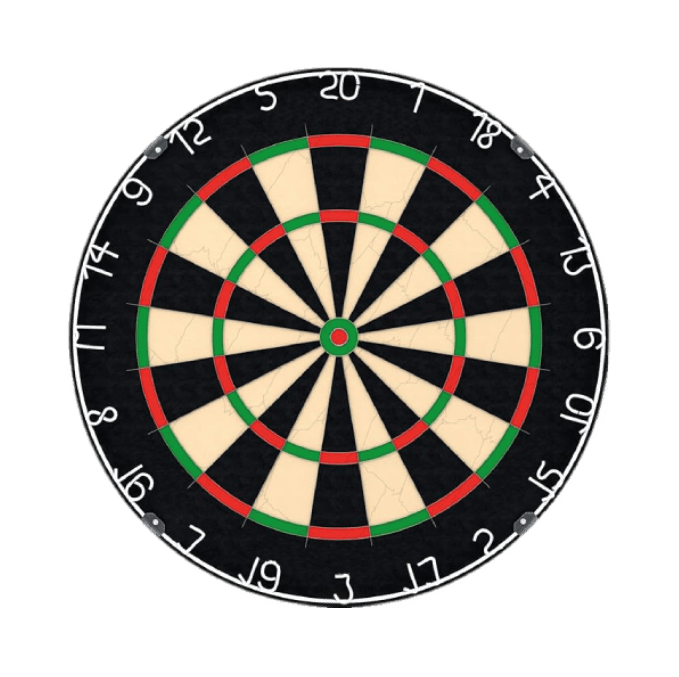
In terms of size, a regulation dartboard measures approximately 18 inches (45.7 cm) in diameter. The board features 20 numbered, pie-shaped segments, arranged in a specific order to reward accuracy and punish missed throws.
Each segment includes:
- Single scoring areas
- A double ring on the outer edge
- A treble ring (often called treble, not triple) on the inner section
At the center of the board, the bullseye consists of two scoring zones:
- Inner bull (red): scores 50 points and measures about 1.5 inches (3.8 cm) in diameter
- Outer bull (green): scores 25 points
Dartboard Setup and Official Height
To begin proper setup, players must mount the dartboard correctly for official play. The center of the bullseye must sit 5 feet 8 inches (1.73 meters) above the floor. This height standard keeps competition fair worldwide.
Throwing Distance (Oche Measurements)
Next, players throw darts from behind the oche. The required distance depends on the dart type used.
Horizontal distance from the board face:
- Steel tip darts: 7 feet 9.25 inches (2.37 meters)
- Soft tip darts: 8 feet (2.44 meters)
Diagonal distance measured from the bullseye:
- Steel tip darts: approximately 9 feet 7 3/8 inches (2.93 meters)
- Soft tip darts: approximately 9 feet 9 1/2 inches (2.98 meters)
Players may use either measuring method as long as they maintain accuracy.
Dartboard Scoring Zones Explained
From a scoring perspective, each numbered segment scores its face value in the single areas. When a dart lands in the triple ring (pronounced treble), it scores three times the segment value.
A dart hitting the double ring scores twice the value. The bullseye delivers the highest single-dart scores available on the board, with the inner bull scoring 50 points and the outer bull scoring 25 points.
Dartboard Materials and Types
Finally, manufacturers produce dartboards for two main formats:
Steel Tip Dartboards
- Use compressed sisal fibers
- Heal themselves as players remove darts
- Appear in professional and traditional competitions
Soft Tip Dartboards
- Use durable plastic segments
- Register dart impacts electronically
- Calculate scores automatically
- Commonly appear in casual and league play
Summary
Overall, the standard dartboard setup creates consistent challenge and fairness from home games to professional tournaments. Although steel tip and soft tip darts require slightly different throwing distances, both formats follow strict standards. Understanding dartboard dimensions, setup, and scoring helps players improve accuracy and play with confidence.